· Winki Team · Focus One · 2 min read
Monotask by Design — Why We Built Focus One ADHD Timer
Fewer choices, one clear task, more calm. A visual, minimalist Pomodoro timer for ADHD focus, study and work—built to reduce decision fatigue and support deep work.
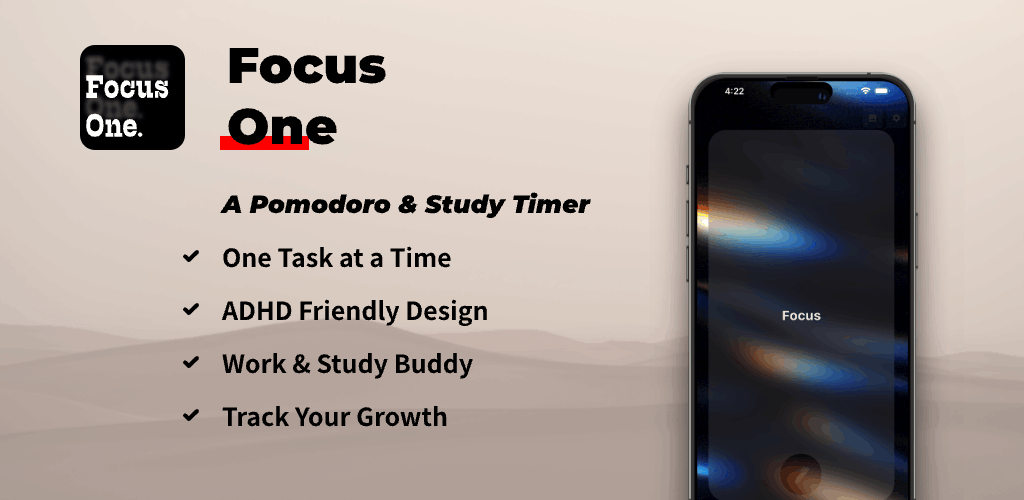
We built Focus One around fewer decisions. Most people don’t need more features; they need a clear next step. ADHD minds, students and professionals share the same hurdle—starting. Our goal was to reduce cognitive load so one small action—pick a task, hit start—could unlock momentum for deep work.
Monotasking became the core. One task in view feels concrete and doable. A visual timer—gentle looping as a focus anchor—keeps attention steady without pressure. Short, humane presets and Pomodoro pacing support deep work and routines across study and work.
Design decisions we held onto:
- One clear center: you choose the task, we remove distractions.
- Minimal controls: start, pause, finish—no complex setup.
- Short, humane intervals: 15, 20, 30 minutes for approachable focus.
- Quick timers: 3‑minute and 1‑minute for micro‑wins and “just begin”.
- Pomodoro friendly: classic tomato rhythm, no gimmicks.
We talked to students, writers and developers, and heard the same theme: when the interface is quiet, their minds are quieter. Adults with ADHD especially value predictable structure and visible endpoints. Focus One is not a diagnosis tool; it is a small companion that turns effort into a gentle routine.
We also chose to keep the core experience ad‑free and straightforward. It is easier to build good habits when your tool does not compete for attention. Upcoming work includes effort tracking that visualizes daily focus as color, plus community presence to make deep work feel shared.
Our north star is user value. Small tools, polished details, and less friction at every step. If Focus One helps you do one thing well today, the design was worth it.